Black chamber
A closed chamber with its own light, so every photo is taken in the same conditions, on the beach or in a lab.
Project 01, Hardware and computer vision
A handheld device that analyses beach sand in seconds, instead of days in a lab.
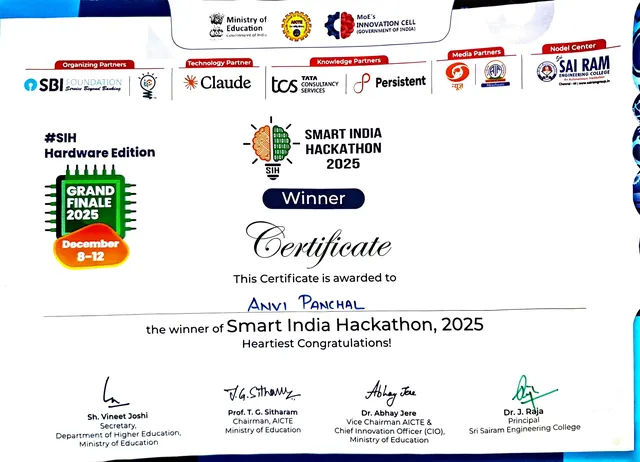
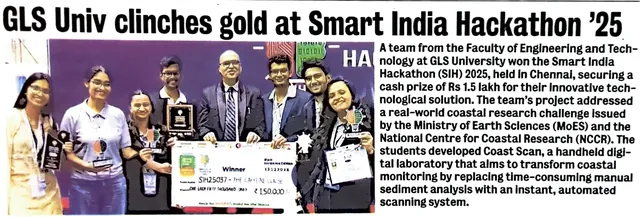
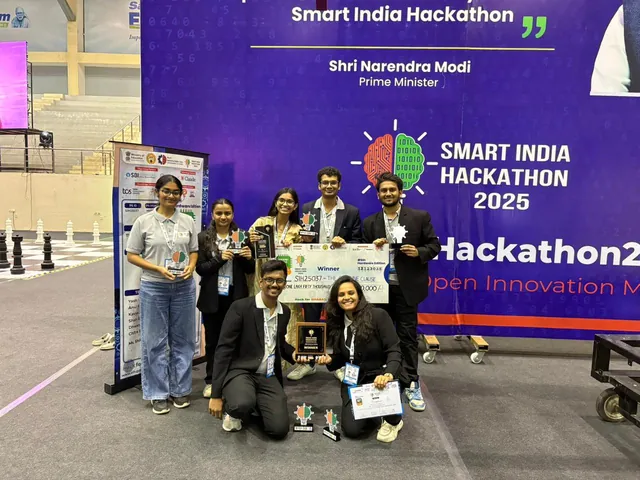
National Winner, Smart India Hackathon 2025, Hardware Edition
01, The problem
Grain size is one of the first things coastal researchers measure. It shows how a beach is changing, where erosion is happening and what kind of sediment is moving.
Today this is done with sieve analysis. A sample is dried, shaken through a stack of sieves and weighed by hand, which takes days of lab work for every sample.
Our problem statement came from the Ministry of Earth Sciences and the National Centre for Coastal Research. They wanted a faster way to get the same answer in the field.
02, What we built
Coast Scan is a low-cost handheld device. You put a sand sample inside, and it photographs the grains, measures them and sorts the sediment, then shows the result on a dashboard along with environmental readings.
A closed chamber with its own light, so every photo is taken in the same conditions, on the beach or in a lab.
A Raspberry Pi camera captures the grains, and onboard sensors record the conditions around the sample.
Results appear on a web dashboard with the grain size distribution, the sediment type and the sensor readings.
03, How it works
The camera takes a close-up photo of the sample inside the chamber.
Thresholding, contour detection and morphological operations separate each grain from the rest.
The device works out the grain size distribution, the D50 grain size and the sediment type. We also tested CNN models for grain recognition.
A Django dashboard on AWS turns the numbers into a report you can read and share.
04, Results
agreement with lab sieve analysis on the D50 grain size
A report that used to need days of manual lab work is now generated automatically.
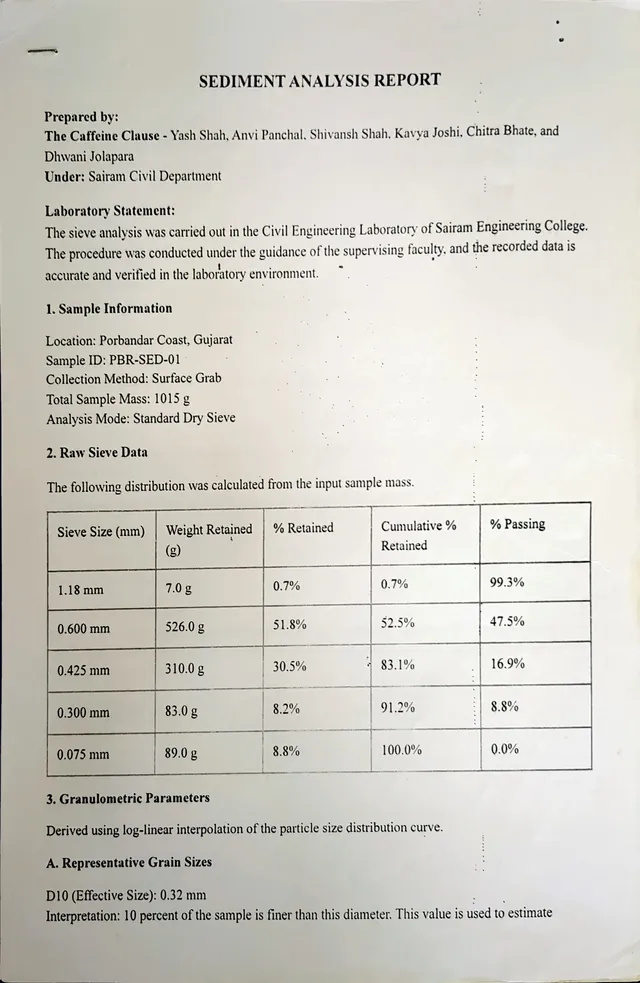
Validated in the Civil Engineering laboratory at Sri Sairam Engineering College. The lab report is signed and stamped by the head of the department.
Open the lab report05, Where it went
Built with